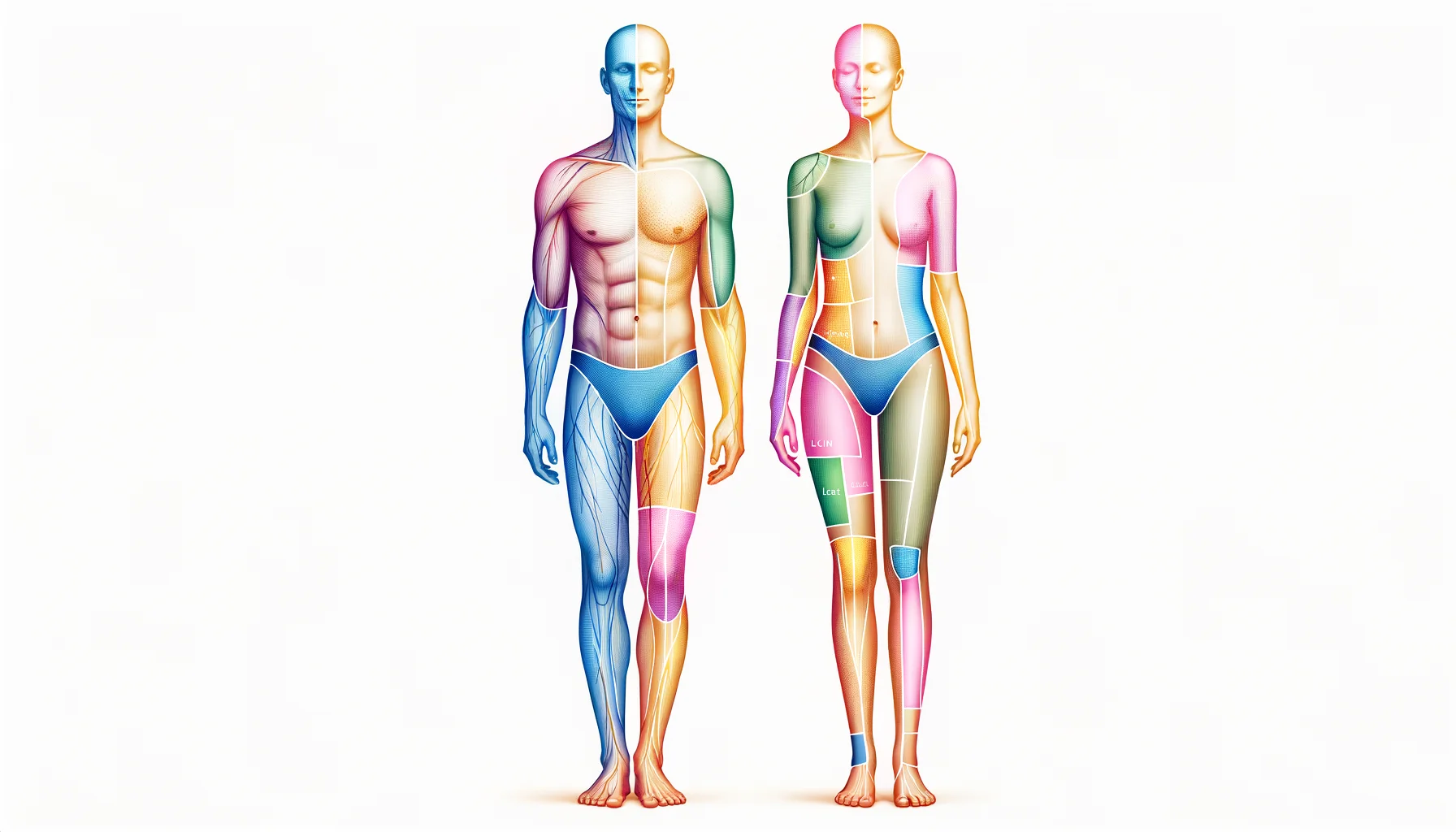
The efficacy of laser hair removal varies considerably depending on the body area treated. These variations reflect biological differences in hair growth cycle, follicular density, hair quality, and anatomical accessibility. Selection of technical parameters and number of sessions must be adapted to each body region.
Overview of treatment areas
Main characteristics of primary laser hair removal areas.
| Area | Session duration (min) | Number of sessions | Interval (weeks) | Typical hair color | Difficulty |
|---|---|---|---|---|---|
| Upper lip | 5-10 | 6-8 | 4-6 | Brown/black | Very easy |
| Chin | 10-15 | 6-8 | 4-6 | Brown/black | Easy |
| Cheeks | 15-20 | 6-8 | 4-6 | Variable | Easy |
| Underarms | 10-15 | 6-8 | 4-6 | Black/thick | Easy |
| Standard bikini | 20-30 | 6-8 | 4-6 | Black/thick | Moderate |
| Full bikini | 30-45 | 8-10 | 4-6 | Black/thick | Difficult |
| Full legs | 45-60 | 6-8 | 4-6 | Variable | Moderate |
| Lower legs | 30-40 | 6-8 | 4-6 | Variable | Easy |
| Arms | 20-30 | 6-8 | 4-6 | Brown fine | Very easy |
| Forearms | 10-20 | 6-8 | 4-6 | Brown fine | Very easy |
| Full back | 45-60 | 6-8 | 4-6 | Brown/black | Moderate |
| Upper back | 25-35 | 6-8 | 4-6 | Variable | Easy |
| Chest (male) | 30-45 | 6-8 | 4-6 | Variable | Moderate |
| Nape | 10-15 | 6-8 | 4-6 | Fine/variable | Easy |
Details by body area
| Name | Anatomy | Challenge | Hair characteristics | Anagen percentage | Anagen duration | Recommended fluence | Cooling | Protocol notes |
|---|---|---|---|---|---|---|---|---|
| Face - Upper lip | Very accessible area, thin epidermis, no terminal hairs but pigmented vellus hairs | Variable skin pigmentation, very sensitive and visible area | Fine to terminal hairs, highly variable in thickness and color by phototype | 65-75% | 3-4 months | 12-18 J/cm² (fair skin types) to 10-14 J/cm² (dark skin types) | Enhanced - very sensitive area | Frequent cosmetic treatment. Patience required as hairs are fine. Excellent cosmetic result after complete series. |
| Face - Chin and cheeks | Sensitive area, frequently affected by excess hair in hormonal disorders (women) or genetics (men) | Thick black hairs in certain phototypes, proximity to eyes and eyelids | Terminal to semi-terminal, generally well pigmented | 70-80% | 3-4 months | 15-25 J/cm² (fair skin types) to 12-18 J/cm² (dark skin types) | Moderate to enhanced | Excellent hair-skin contrast on most phototypes. Women often report marked psychological improvement. |
| Underarms | Area prone to sweat and maceration. Sensitive skin. Many thick hair follicles. | Thick abundant hairs, high-humidity area (sweat, hygiene), pain and burn sensitivity | Thick terminal hairs, well pigmented, high density | 80-85% | 4-6 months | 18-28 J/cm² (fair skin types) to 14-20 J/cm² (dark skin types) | Enhanced - sensitive area subject to cooling loss from perspiration | Area with excellent satisfaction rate (90%+ efficacy). Marked pain sensitivity in many patients. SHR mode recommended for comfort. Moderate hyperpigmentation risk on dark skin. |
| Bikini - Standard area | Classic pubic triangle. Sensitive skin. Proximity to mucous tissue. | Sensitive area, very high follicular density, thick black hairs | Very thick terminal hairs, black, very high density | 85-90% | 5-7 months (longer than other areas) | 16-26 J/cm² (fair skin types) to 12-18 J/cm² (dark skin types) | Enhanced - very sensitive area | Area with growing demand. Complete hair removal possible but requires patience (8-10 sessions). Excellent results (90-95% reduction). Contraception recommended (concurrent studies). Hypertrophic scars possible (2-3%). Local anesthesia optional. |
| Bikini - Full area | Complete extension including perineal and perianal zones. Delicate anatomy. Minimally pigmented adjacent mucous zones. | Very sensitive area, complex anatomy, strong thick hairs, very close proximity to mucous tissue (risk of mucosal burn) | Extremely thick terminal hairs and black, pigmentation change at epidermis-mucosa transition | 80-90% | 5-8 months | 14-20 J/cm² (fair skin types) to 10-16 J/cm² (dark skin types) | Very enhanced - extremely sensitive area and mucosa | Very delicate area. Clinical experience required. May be contraindicated on phototypes V-VI. Local anesthesia recommended. Risk of mucosal injury if fluences too high. Excellent satisfaction rate but inexperienced professional not recommended. |
| Legs | Very large area. Variable skin (thinner on inner thigh). Excellent accessibility. Less sensitive than other areas. | Large surface (long treatment), variable skin and hairs, high sun exposure (tan or sunscreen) | Fine to thick terminal hairs, variable by phototype and genetics, variable pigmentation (often less black than underarms) | 70-80% | 4-6 months | 20-35 J/cm² (fair skin types) to 16-25 J/cm² (dark skin types) | Moderate - less sensitive area than face or underarms | Very popular hair removal area. Excellent results in all phototypes. Standard 6-8 sessions. Long treatment duration (45-60 min full legs). Strict photoprotection important (sun-exposed area). Slightly reduced efficacy on blonde/fine hair. |
| Arms | Large but easy to treat area. Relatively thin skin. Variable sensitivity by region (inner more sensitive than outer). | Fine hairs, poor contrast on some phototypes (blonde/fine hairs), often tanned area | Vellus to semi-terminal, fine, often blonde or pale brown | 65-75% | 3-4 months | 18-28 J/cm² (fair skin types) to 14-20 J/cm² (dark skin types) | Mild to moderate | Area of excellent feasibility. Even fine blonde hairs generally respond to laser (requires higher fluences). Moderate photoprotection required. Excellent cosmetic results (very satisfying for patients). |
| Back | Large surface. Thick skin. Hairs generally already sparse compared to underarms. Possible asymmetry (different density top vs bottom). | Large surface (long treatment duration), hairs often fine or sparse (less effective), phototypes with significant back hair | Vellus to semi-terminal, variable (some men have thick back hair, women fine hair) | 60-70% | 3-4 months | 20-30 J/cm² (fair skin types) to 16-24 J/cm² (dark skin types) | Moderate | Popular area in men with high back hair. Less efficacy if fine or blonde hairs. 8-10 sessions sometimes necessary for fine hair. Excellent for patients with thick hair (90%+ results). Positional access sometimes difficult for certain areas. |
| Chest (male) | Thick skin. Frequent asymmetry (right vs left side). Hair growth genetically determined and hormonally sensitive. | Potentially thick abundant hairs in some men, reduced efficacy if fine or sparse hairs, hair growth often recurs after treatment (hormonal) | Highly variable: can range from near absence to thick hair (genetics + testosterone) | 65-80% | 4-5 months | 20-30 J/cm² (fair skin types) to 16-24 J/cm² (dark skin types) | Moderate | Variable results depending on initial hair density. For thick hair: excellent results (90%+). For fine hair: lesser efficacy (50-70%). Regrowth sometimes possible (hormonal). Superior efficacy in men with stable testosterone levels. |
| Nape | Small area. Sensitive skin. Close to scalp hair (cosmetic distinction). | Distinction from terminal scalp hairs, hairs often fine, sensitive area | Fine vellus hairs, often blonde or pale brown, important cosmetic distinction from scalp hair | 70-75% | 3-4 months | 14-20 J/cm² (fair skin types) to 10-14 J/cm² (dark skin types) | Moderate | Cosmetically delicate area (important demarcation line). Fine hairs = reduced efficacy, more sessions. Excellent patient adherence (visible cosmetic issue). Excellent cosmetic results once completed. |
Hair growth cycle by body area
Hair cycle variations directly influence treatment efficacy and recommended interval between sessions.
| Area | % Anagen | Anagen duration | % Telogen | Telogen duration | Recommended session interval |
|---|---|---|---|---|---|
| Upper lip | 65-75% | 3-4 months | 10-15% | 1-2 months | 4-6 weeks |
| Chin/cheeks | 70-80% | 3-4 months | 10-15% | 1-2 months | 4-6 weeks |
| Underarms | 80-85% | 4-6 months | 10-15% | 2-3 months | 6-8 weeks |
| Bikini | 85-90% | 5-7 months | 8-12% | 2-3 months | 6-8 weeks |
| Legs | 70-80% | 4-6 months | 15-20% | 2-3 months | 4-6 weeks |
| Arms | 65-75% | 3-4 months | 15-20% | 1-2 months | 4-6 weeks |
| Back | 60-70% | 3-4 months | 20-25% | 2-3 months | 6-8 weeks |
| Chest | 65-80% | 4-5 months | 15-20% | 2-3 months | 6-8 weeks |
| Nape | 70-75% | 3-4 months | 15-20% | 1-2 months | 4-6 weeks |
Why multiple sessions are necessary
Hair cycle biology explains why a single laser session cannot provide definitive hair removal.
At any given time, only 20-30% of hair follicles are in the anagen phase (active growth), the period during which laser is effective. The remaining 70-80% are in catagen (regression) or telogen (rest) phases. These resting hairs will progressively enter the anagen phase over the following months. The laser can only treat them during their active growth phase. This is why complete hair removal requires 6-10 sessions over several months.
| Number | Action | Result | Timing |
|---|---|---|---|
| Session 1 | Treatment of follicles in anagen (20-30%) | Visible hair removal 20-30% | Week 0 |
| Session 2 | Previous telogen follicles transition to anagen and are treated | Additional hair removal 20-30% (different follicles) | Week 4-6 (optimal interval) |
| Session 3 | Next wave of telogen follicles becoming anagen | Additional hair removal 20-25% | Week 8-12 |
| Sessions 4-8 | Treatment of subsequent cycles + resistant hairs | Progressive reduction to 85-90% | Month 3-12 |
Protocol optimization by area
Recommended approaches to maximize efficacy and safety by area.
| Zone type | Optimization |
|---|---|
| Face (small areas) | High fluences, long pulse for deep hair removal, enhanced skin cooling. Systematic skin test if phototype III+. 4-week interval to maximize new anagen hairs. |
| Very sensitive areas (underarms, bikini) | SHR mode preferred for pain reduction. Very enhanced dermis cooling. 6-8 week intervals may be justified (better tolerance). Local anesthesia optional. |
| Extended areas (legs, back) | Slightly reduced fluences (for tolerance) but effective. Short pulse acceptable (penetration less critical in thick areas). 4-6 week intervals. Long treatment duration = operator fatigue (risk of errors). |
| Fine or blonde hair | Increase fluences by 20-30%, longer pulse for better penetration. 8-10 sessions instead of 6. May be ineffective if very blonde/red. |
| Phototypes IV-VI | Reduced fluences, 808 nm wavelengths (IV) or 1064 nm (V-VI), SHR mode strongly recommended. Very enhanced cooling. Extended intervals (6-8 weeks). Mandatory skin test. |
Frequently asked questions
Duration varies enormously by area: 5-10 min for upper lip, 15-20 min for underarms, 45-60 min for full legs, 45-60 min for full back. Complete body hair removal (legs + underarms + bikini + arms + back) takes 2-3 hours.
The 4-6 week interval corresponds to the average time necessary for telogen follicles (at rest) to progressively differentiate into anagen (growth). A shorter interval (2-3 weeks) treats follicles not yet in anagen (less effective). A longer interval (8+ weeks) allows new hair to reach cosmetically bothersome length.
No, the number of sessions (6-8) is identical for legs and underarms. However, if leg hairs are fine or blonde, 8-10 sessions may be necessary. The main difference is total treatment duration (longer for legs) and area covered.
Yes, but with nuances. If the woman has visible terminal back hair (less common case), efficacy is excellent (90%+). If hair is fine vellus (more common case), efficacy is lesser (50-70%). The distinction depends on individual genetics.
Full bikini requires 8-10 sessions (vs 6-8 for standard bikini) because: (1) extremely thick resistant hairs, (2) complex anatomy making treatment more difficult, (3) high sensitivity limiting fluences (mucosal risk). More sessions = more complete results.
Yes technically, but not recommended. Treating too many areas in one session (> 2-3 hours): (1) increases patient fatigue, (2) reduces treatment quality (operator fluidity decreases), (3) increases global erythema risk. A progressive approach (legs + underarms session 1, bikini + arms session 2) is preferable.
Blonde hair contains less melanin, reducing laser absorption. Hair removal remains possible but: (1) reduced efficacy (50-70%), (2) higher fluences necessary (increased risk), (3) more sessions required (10-12). Very blonde/red hair may be practically impossible to remove by laser.
Sources scientifiques
- . Laser-assisted hair removal and skin resurfacing. J Am Acad Dermatol (1999) ;41 (2) :165-171 . PMID: 10426883
- . Persistent reduction of hair density. J Dermatolog Treat (2004) ;15 (2) :72-83 . PMID: 15204154
- . Permanent hair removal by means of a pulsed diode laser. Dermatol Surg (1999) ;25 (1) :1-7 .
- . Laser-assisted hair removal. Dermatol Surg (2003) ;29 (6) :592-596 . PMID: 12786699
Vous souhaitez en savoir plus ?
Contactez nos experts pour une démonstration personnalisée des appareils NeoCure.
Demander une démonstration